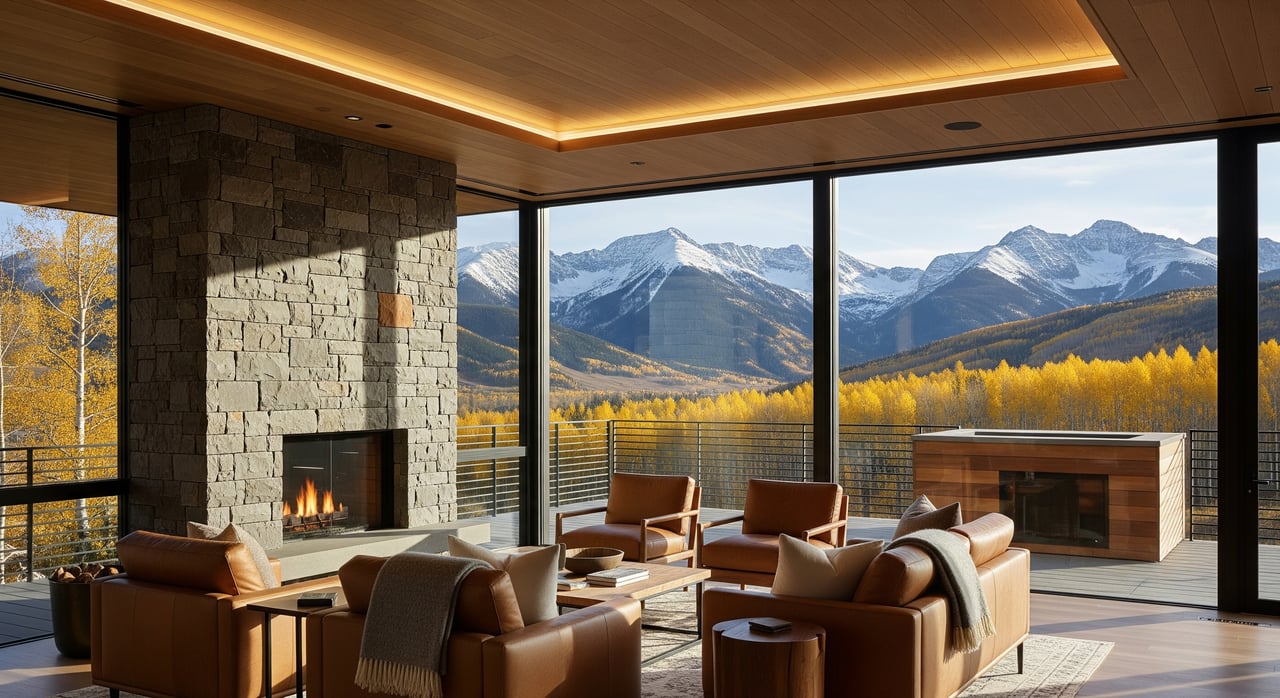
If you love Mountain Star’s alpine setting but struggle with dry air, finicky fireplaces, or uneven heat, you are not alone. Homes above 8,000 feet live differently. Air is thinner, winters are longer, and small choices in equipment and setup make a big difference in comfort, safety, and efficiency. In this guide, you will learn how altitude changes HVAC performance and how to select heating, ventilation, and humidification that actually works in Mountain Star. Let’s dive in.
Why altitude changes HVAC
At high altitude, air pressure is lower, so each cubic foot of air carries less oxygen and less mass. That matters for three reasons:
- Combustion needs oxygen. Gas furnaces, water heaters, and fireplaces must be designed or adjusted for altitude to burn cleanly and vent safely.
- Fans move volume, not mass. The same cubic feet per minute of airflow carries less heat at altitude, so ducts, blowers, and controls may need different settings.
- Heat pumps see different pressures. Modern inverter-driven systems often adapt well, but you should still verify performance at elevation.
If you plan equipment for sea level, you risk poor combustion, nuisance shutdowns, and comfort issues. Follow manufacturer guidance and use installers who know how to set systems for Mountain Star conditions. The technical foundation behind these choices aligns with national standards and guidance from groups like ASHRAE and the U.S. Department of Energy.
Heating options that perform
Sealed-combustion gas appliances
If you use natural gas or propane, choose sealed-combustion, direct-vent furnaces and water heaters. These systems pull combustion air from outside and vent outside, which reduces pressure conflicts inside your home. Ask your installer to confirm any high-altitude conversion kits or settings required by the manufacturer and to provide documentation.
Why it matters in Mountain Star: a tight home plus powerful exhaust fans can create negative pressure and backdrafting risk. Sealed-combustion design and balanced ventilation help keep you safe and comfortable.
Modern cold-climate heat pumps
Cold-climate, inverter-driven air-source heat pumps have improved a lot. Many provide reliable heat during mountain winters while also delivering efficient cooling in shoulder seasons. At altitude, confirm the manufacturer’s low-temperature capacity and any altitude notes for both the compressor and indoor blower. A good installer will size and commission the system to local conditions. You can learn more about the technology from the U.S. Department of Energy.
Geothermal heat pumps
Ground-source systems rely on the stable temperature of the earth, not outdoor air. That means they are largely unaffected by the thin air at 8,000 feet. They do carry higher upfront cost and require drilling or loop fields. If you plan a long-term hold and want quiet, steady performance, geothermal is worth a feasibility review.
Fireplaces and large exhaust devices
Gas fireplaces should be direct vent and altitude-ready. For large range hoods or whole-house fans, provide dedicated makeup air so you do not pull cold air through cracks or disrupt combustion venting. This is a comfort and a safety issue.
Ventilation that protects IAQ
Modern mountain homes are often tight, so you need mechanical ventilation to meet fresh-air needs. Balanced systems bring in and exhaust air in equal measure, which helps maintain safe, neutral pressure inside the home. National ventilation guidance such as ASHRAE Standard 62.2 offers a framework your designer or installer can follow.
ERV vs HRV in a dry winter
- HRV transfers heat only.
- ERV transfers heat and moisture.
In Mountain Star’s dry winters, an ERV usually improves comfort because it reduces how much moisture you lose with each air change. That means your home stays less dry, and your humidifier works less to maintain a comfortable range.
When an HRV can make sense
If you have unusually high indoor moisture loads, such as frequent large gatherings or a specialty space that adds humidity, an HRV may help you remove that extra moisture while recovering heat. Your installer can model use cases and recommend the right core type.
Humidity without condensation
Winter air in the Vail Valley is very dry. You want enough humidity to feel comfortable, but not so much that windows or cold surfaces collect condensation. A practical target in very cold weather is about 25 to 35 percent indoor relative humidity. Lower the setpoint during extreme cold snaps if you see moisture on glass or frames.
Whole-home humidifier options
- Steam humidifiers. Precise and effective, independent of furnace run time. They use more energy but perform well in very dry, very cold conditions.
- Bypass or flow-through units. More affordable and tied to furnace airflow. Output depends on runtime and duct conditions.
- Room units. Useful for small spaces, but rarely a whole-home solution.
Whichever you choose, confirm altitude performance, drainage, and maintenance access. Pair it with an ERV for best winter comfort.
Smart window and surface strategy
Keep an eye on the coldest surfaces in your home. If you see consistent condensation, reduce RH until it stops. Good blinds, insulated shades, and tight windows help raise interior surface temperatures, which allows slightly higher RH without moisture problems.
Wildfire smoke readiness
Wildfire smoke can reach Eagle County during summer and fall. Prepare your air system so you can maintain indoor air quality when outdoor air is poor.
- Use whole-home filtration with a high MERV rating. Many IAQ experts recommend MERV 13 where your system can handle the pressure drop.
- During heavy smoke, set systems to recirculate and reduce outdoor air intake temporarily. Resume normal ventilation when the event passes.
- Follow health and ventilation guidance from the U.S. Environmental Protection Agency.
Safety, codes, and incentives
Combustion safety and CO alarms
If you have any combustion appliances, carbon monoxide safety is essential. Install and maintain CO alarms per code in sleeping areas and on each level. Schedule annual service for furnaces, water heaters, fireplaces, and ventilation systems. The Centers for Disease Control and Prevention provides clear CO safety guidance for households.
Code and design coordination
Your installer should size and design ventilation using recognized standards such as ASHRAE 62.2. Confirm local code requirements with Eagle County or the Town of Red Cliff before you purchase equipment, and ask your contractor to document all altitude settings, combustion air, clearance, and venting details.
Rebates and programs to explore
Local and state programs can offset part of your upgrade cost. Check with Holy Cross Energy for incentives on heat pumps, heat pump water heaters, and weatherization. The Colorado Energy Office and federal programs also offer rebates and tax credits for electrification and efficiency. Program details change often, so verify current terms before you start.
Your Mountain Star HVAC checklist
Use this list to plan a new build or retrofit with confidence.
- Confirm equipment is rated or configurable for 8,000-plus feet. Ask for manufacturer altitude specifications in writing.
- Prefer sealed-combustion, direct-vent gas appliances. Consider electric or heat pump alternatives to avoid combustion-air complications.
- Specify balanced mechanical ventilation. In winter, an ERV usually helps maintain comfort with less added humidity.
- Choose a humidifier strategy. Steam offers precise control. Bypass units cost less but depend on furnace runtime.
- Size ducts, blowers, and airflow for altitude. Lower air density changes performance.
- Plan for wildfire smoke. Use high-efficiency in-duct filtration and discuss intake filtration or bypass for your ERV or HRV.
- Request safety testing. Ask for combustion spillage checks and a whole-home pressure or blower-door test, especially in tight homes.
Questions to ask your installer
- Do you regularly install systems above 7,000 to 8,000 feet? Can you share local references?
- Will the equipment ship with high-altitude kits or settings? Can you provide the manufacturer documentation?
- How will you size ventilation and the humidifier? What assumptions are you using about airtightness and occupancy?
- How will you maintain balanced ventilation and avoid negative pressure when exhaust fans run?
- Which local rebates and programs fit this project and how do we qualify?
When your HVAC plan matches the realities of Mountain Star’s climate and elevation, you get a home that feels quiet, clean, and comfortable through every season. If you are considering a remodel or a new purchase in the neighborhood, it pays to align the right team early and verify altitude details before you order equipment.
Ready to explore property decisions or connect with trusted local HVAC resources? Schedule a private consultation with Unknown Company.
FAQs
Will my furnace work at 8,000-plus feet in Mountain Star?
- Yes, if it is sealed combustion and configured per the manufacturer’s altitude guidance. Open-combustion models are more challenging, so favor direct-vent units or electric options.
Should I choose an ERV or HRV for a Mountain Star home?
- In dry winters, an ERV usually helps by transferring some moisture back indoors while recovering heat. Choose an HRV only if you consistently need extra moisture removal.
What winter humidity level should I target at high elevation?
- Aim for about 25 to 35 percent relative humidity in very cold weather. If condensation appears on windows, lower the setpoint until it clears.
Are modern heat pumps a good fit for the Vail Valley climate?
- Many cold-climate, inverter-driven heat pumps perform well. Verify the manufacturer’s low-temperature and altitude performance and size the system for your home.
How should I run ventilation during wildfire smoke events?
- Use high-efficiency filtration and set your system to recirculate. Reduce or pause outdoor air intake until air quality improves, and follow EPA smoke guidance.